

What were the SQUINKIES?
Discovering the mysterious Golden Age term, and introducing a new feature with classic public domain comics.

BCKOMIX now has a Ko-fi with more articles, comic inspiration, and more! And if you like what you read here, don’t forget to subscribe!

Robert Crumb turned me onto the term SQUINKY.
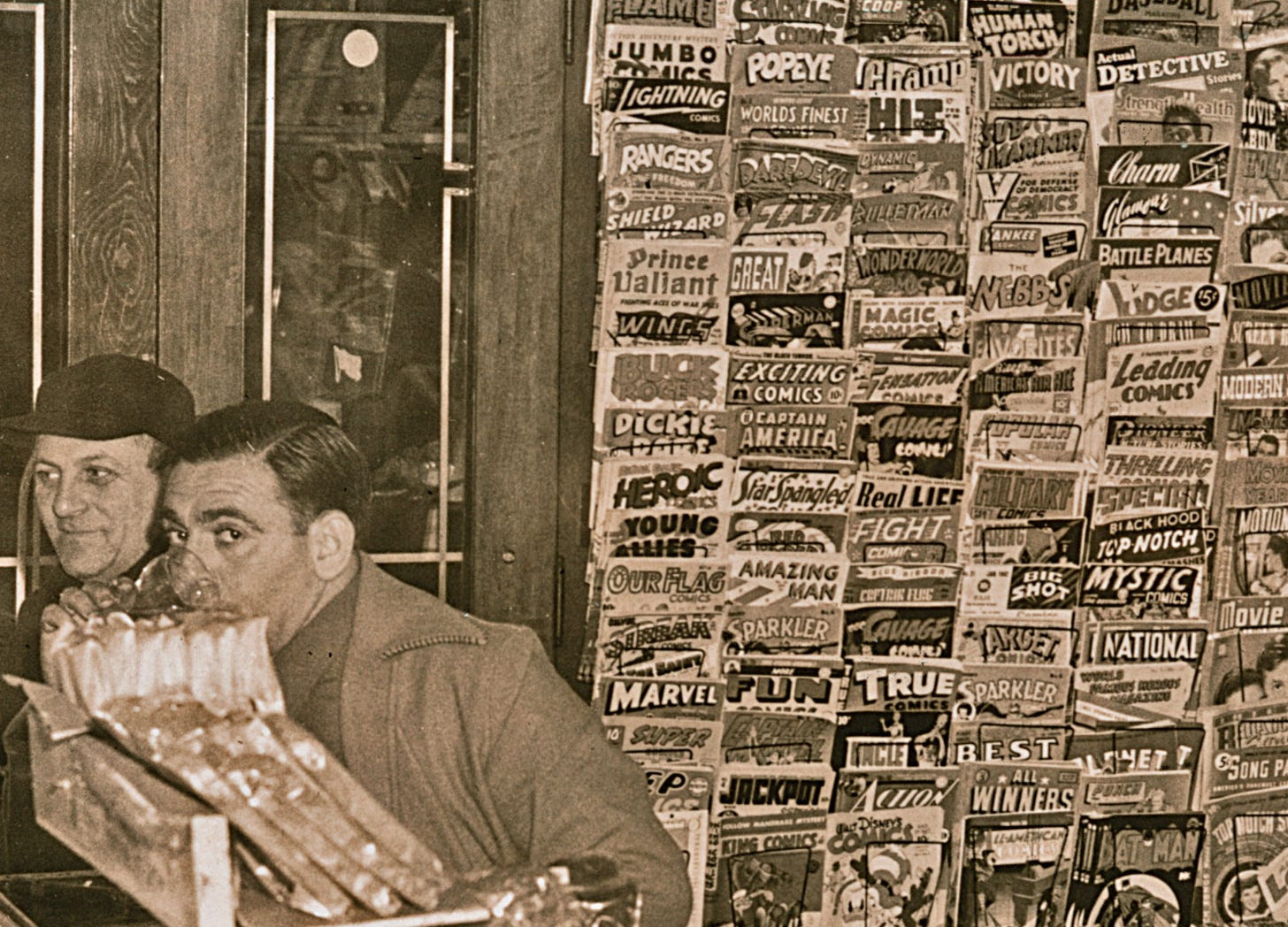
1966. Crumb was 22. He had just broken up with his first wife, Dana. He had just come off a short stint working for Woody Gellman’s Nostalgia Press, digging through clippings of original artwork by the likes of Winsor McCay and Alex Raymond. His longtime friend Marty Pahls dragged his ass into a musty used magazine shop in a poor North Chicago neighborhood. What he discovered eventually led to an epiphany.
As described in Dan Nadel’s Crumb biography:
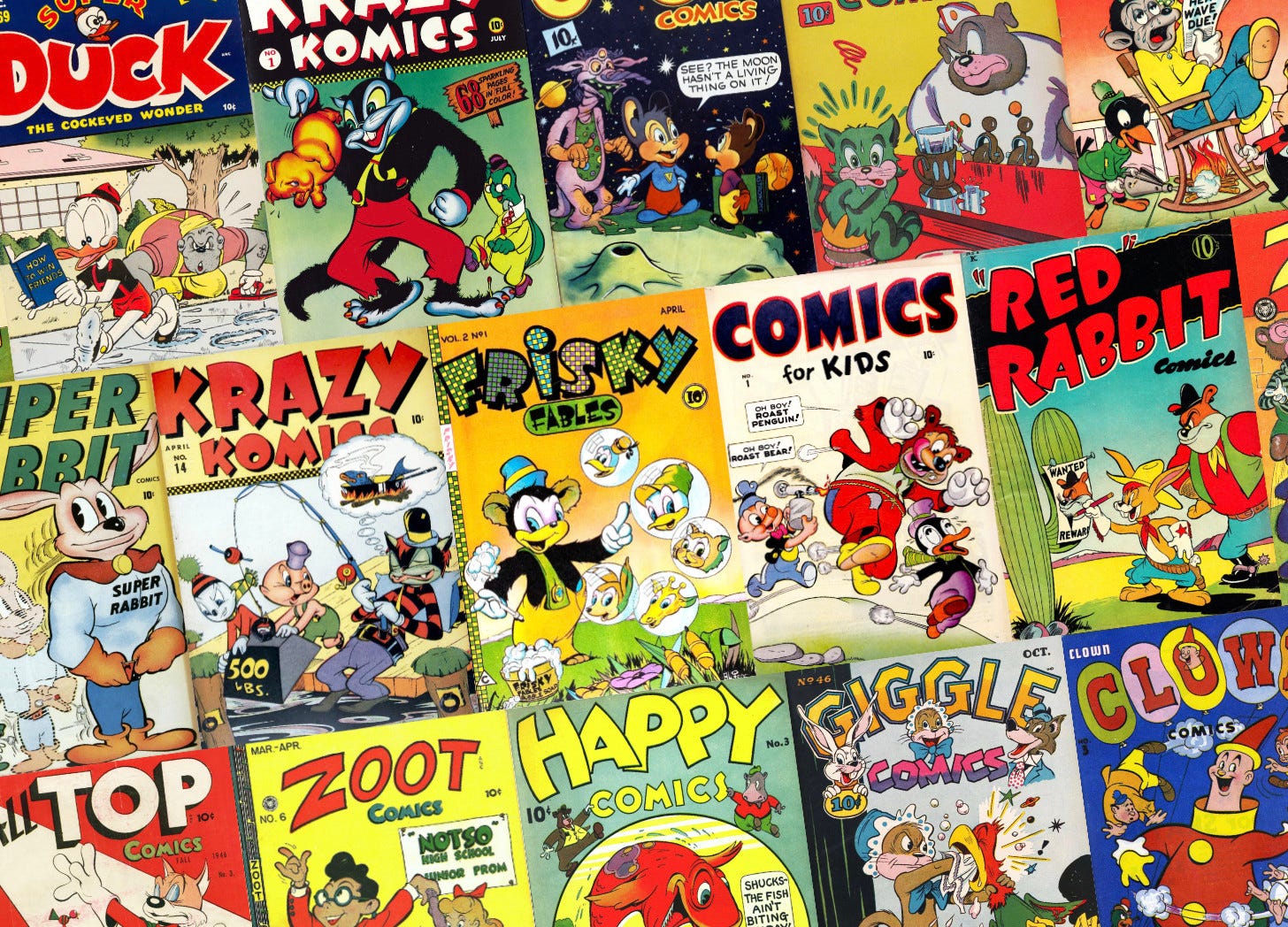
The long journey, and its capstone performance, seemed in keeping with what they found inside: stacks of grade-Z comic books from the 1940s with titles like Krazy Komics, Barnyard Comics, Super Duck, Coo Coo, Ha Ha, Frisky Fables … They were drawn by moonlighting animators supplementing their income from Warner Bros., Disney, MGM, and Columbia Pictures, writers and artists who worked on entertainment for millions of children—from Pinocchio to Fantasia to Looney Tunes. Topp’s Woody Gelman was himself once among them.
It was from this stew ~ assisted by lysergic acid diethylamide ~ that Crumb’s SQUINKY style emerged: kaleidoscopic-carnivalesque, rando-humor, puny pin-heads, rubbery limbs, BIG FEET stomping into a happy oblivion. It was one of the most fertile periods in Crumb’s artistic development, which spawned many of his most well known characters: Mr. Natural, Flakey Foont, The Snoid, Eggs Ackley, Schuman the Human, The Vulture Demoness, etc., etc., etc. And that source of many of his legal troubles, KEEP ON TRUCKIN.’
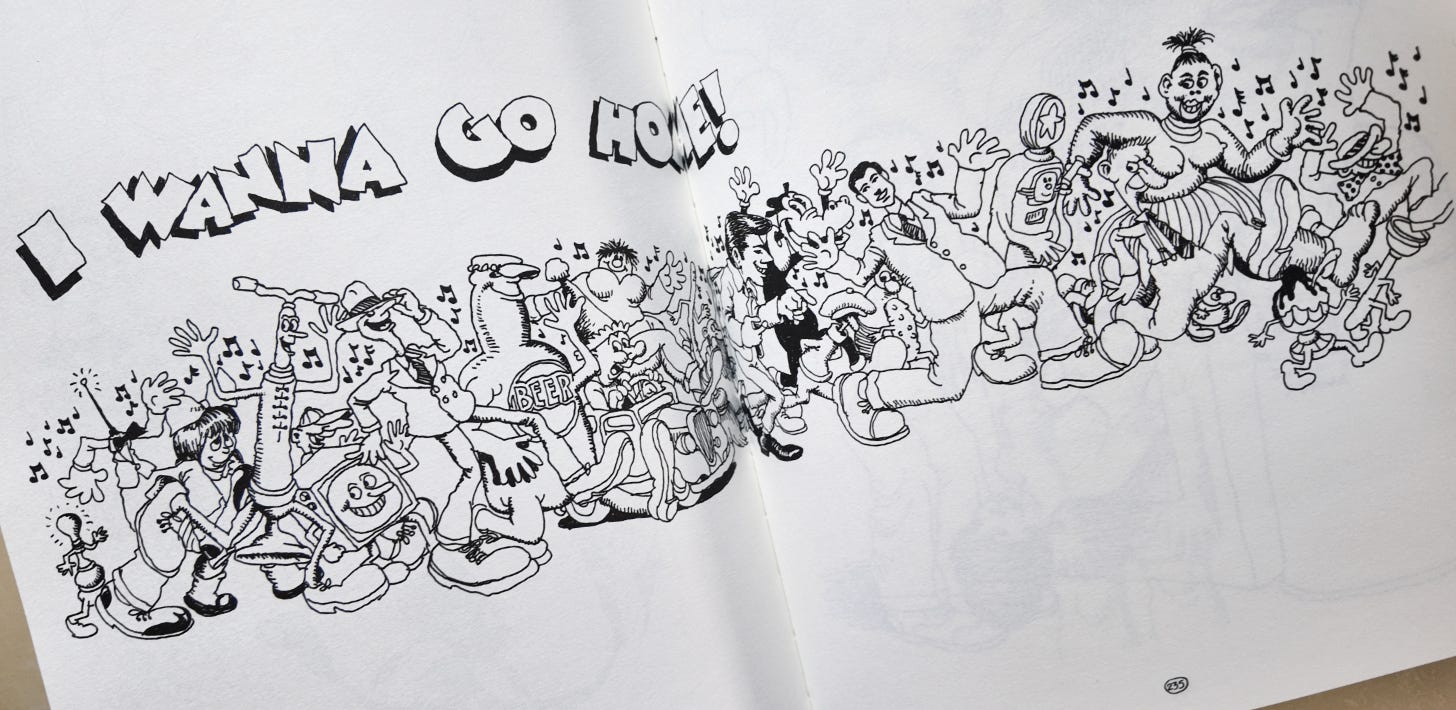
As Crumb described this sketchbook-revolution:
A whole new thing was emerging in my drawings, a sort of harkening back, a calling up for what G. Legman had called the “Horror-Squinky” forces lurking in American comics of the 1940s.
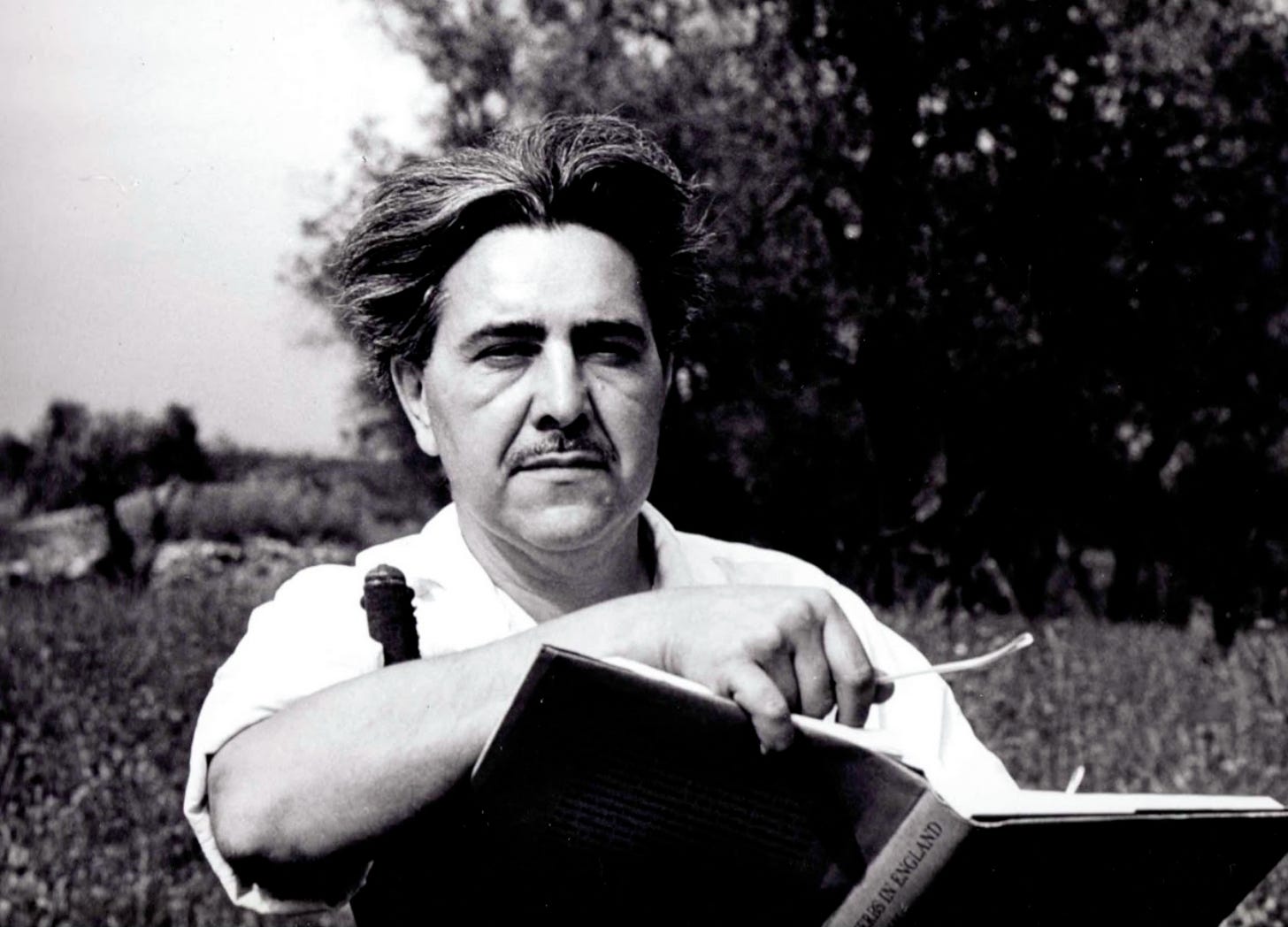
The G. Legman mentioned was one Gershon Legman, professional pervert. In his 1948 article Love and Death, Gershon referred to the “sex-horror or squinkie comics.” His argument was that repression of sex in media led to the glorification of violence, a sort of Freudian transference. He saw this violence boiling over in the medium of comics, and he was ahead of both Fredric Wertham and Alan Moore in seeing funny-book men-in-diapers as fascist übermenschen. He saw a lot of sex in the comics as well:
The exploitation of brutality and terror is blatantly apparent. The homosexual element lies somewhat deeper. It is not—at least, not importantly—in the obvious faggotry of men kissing one another and saying ‘I love you,’ and then flying off through space against orgasm backgrounds of red and purple, not in the transvestist scenes in every kind of comic-book from floppity rabbits to horror-squinkies …
The term SQUINKY just seemed to be floating in the ether, not clearly defined. In Crumb’s mind it represented the crude big-foot & funny animal comics. To Legman the squinkies were filled with fascist homosexual Supermen and lesbian sidekicks like Calamity Jane, produced by “comic-book companies staffed entirely by homosexuals and operating out of our most phalliform skyscraper.” (He had a one track mind.)
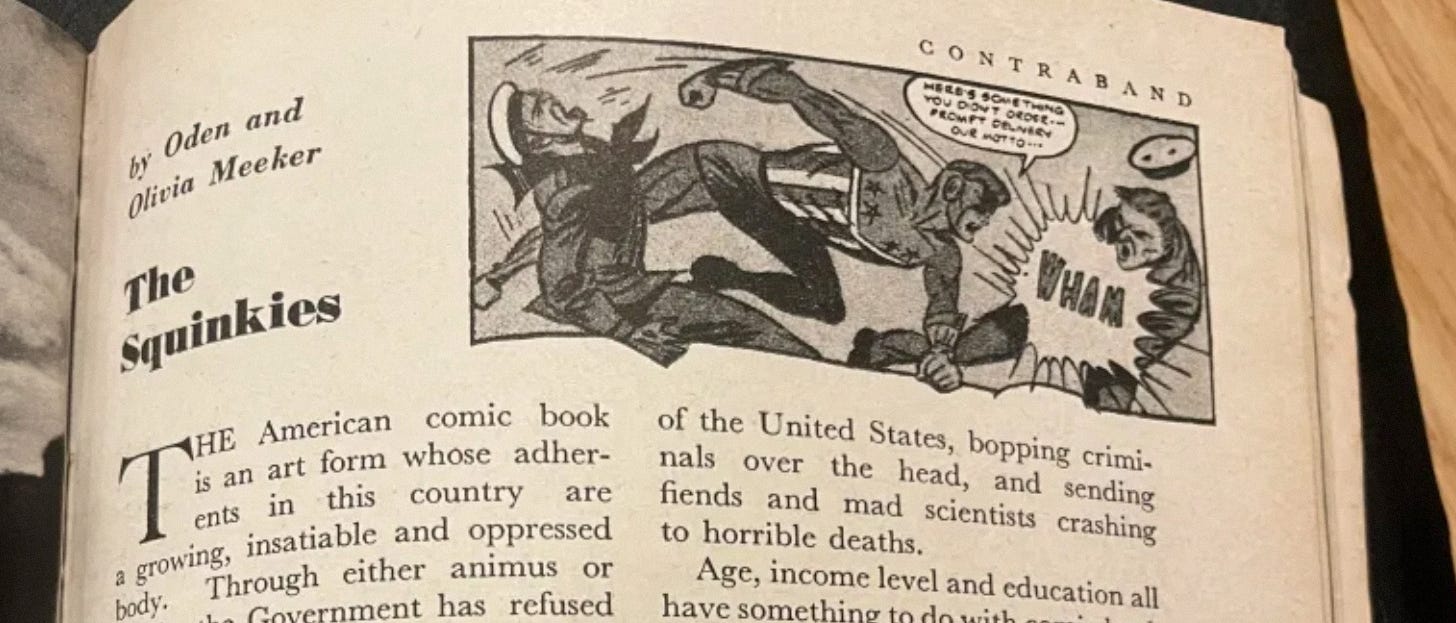
I jumped further down the inter-webs to further decode this whole SQUINKY word-thing. I found the informative post The Squinkies? on the Never Iron Anything blog, which did much of the detective work. It refers to an issue of the British humor magazine Lilliput (v. 25 #4, October 1949) and its article on the rise of American comic books entitled The Squinkies, by Oden and Olivia Meeker. In their words:
Every squinkie in this country has been smuggled, disguised sometimes as the transatlantic sailor’s home library, frequently dispatched by private vendor, between the pure covers of Life, Esquire, or some other officially acceptable magazine. In the war they were flown in by the American Air Force. But however they come, they find a seller’s or smuggler’s market when they get here. The squinkies have arrived.
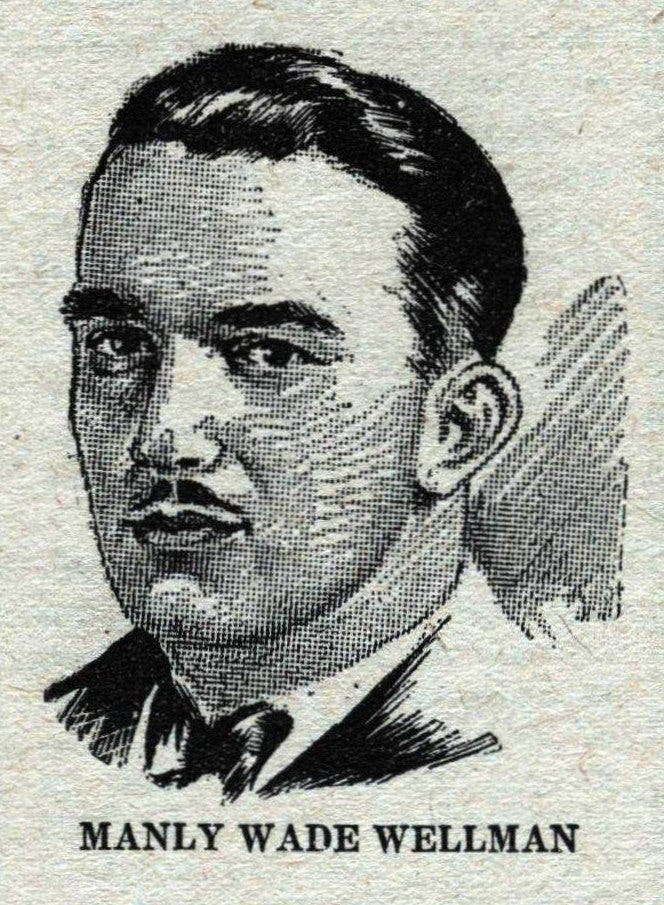
Never Iron Anything later added an update mentioning the aptly named Manly Wade Wellman, writer for such pulps as Weird Tales and Astounding Stories. Wellman also wrote for various comic books, including the first issue of Captain Marvel Adventures for Fawcett Publishers. He called comic books squinkies in an interview for the fanzine Fantasy Media (vol. 2, no. 2, May/June 1980) indicating that it was likely used during the Golden Age. Being Captain Marvel readers it’s possible the Meekers picked up squinkies from Wellman.
Never Iron Anything ponders the origin of the term:
Chatting to Eamonn Clarke he mentioned that there is the inclusion of ‘ink’ just sitting there in the middle of this invented word. Ink is the lifeblood of the comic artist. Especially in the hardworking smoke-filled studios of the Golden Age. Is it too early for a combination of ‘Sequential’ and ‘Inky’? It feels a little too early for that more academic combination? Maybe they were being ‘Squeezed’ hard into ‘Inking’ by unscrupulous money-bags publishers and this was a minor revolt?
Much of the Golden Age era is lost to history—much work remains uncredited, the people involved long dead, publisher records destroyed—but in my admittedly caricatured imagination, SQUINKIES is perfectly in line with ‘20s and ‘30s jazz-hipster jive hep-talk. It’s uniquely descriptive of comic books of the time, those crude cousins of the more refined comic strip.
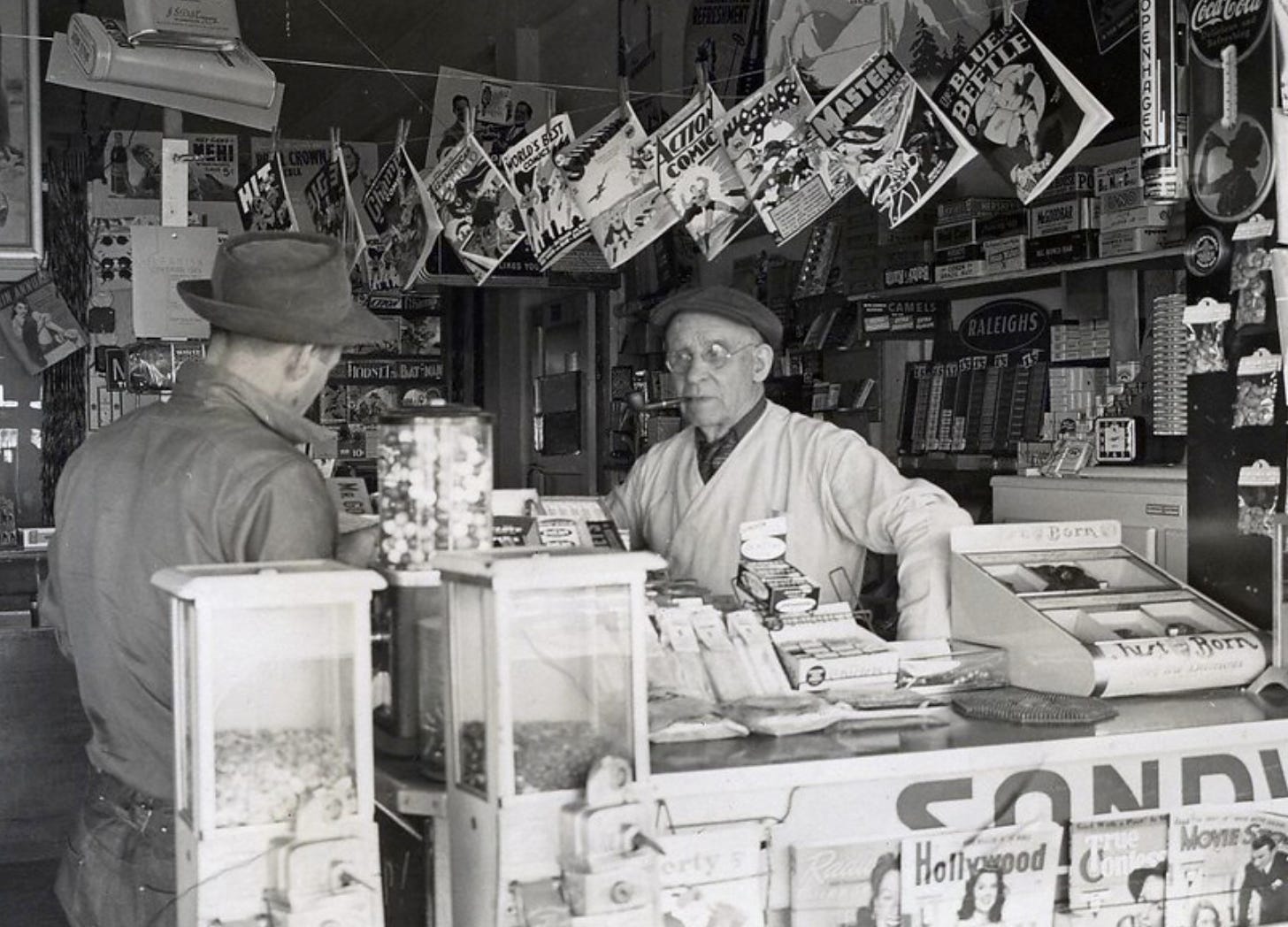
The early squinkies were far from sleek; doused in four colors, the often rough artwork made blobbier by cheap reproduction, sold at newsstands, drug stores, and five-and-dimes. They were churned out in those smokey sweatshops by second-generation Jewish immigrants, the funny animal books often by moonlighting animators. The creators of the properties were young and wide-eyed, most were unaware that they were being exploited. Many of the publishers were sketchy as all-fuck; swindling conmen like Victor Fox and mob-tied hustlers like Harry Donenfeld (those two had been partners on an astrology magazine at some point).
The early superheroes were much more plebeian than the cosmic demigods that now fill up infinite capeshit movies (for those who prefer the cosmic, Jack Kirby did it much better than CGI). Rather, those Golden Age squinky heroes were often second-rate square jawed Flash Gordons, leftover pulp G-Men, Mandrakian magicians, vigilantes that were really just private DICKS (to pull a G. Legman), and costumed kooks that looked like they just woke up in their pajamas, possibly with shit in their undies.
Much like manga today, pre-code American comics were much more diverse genre-wise, with mysteries, romance, crime, westerns, horror, and the genre that enraptured Crumb: funny animals. As a child Robert was influenced by his brother Charles, who passed on his appreciation of John Stanley’s Little Lulu and the good duck artist, Carl Barks. But that was patrician taste compared to the second-hand squinkies Crumb ran into in 1966.

Not being able to license well-known characters like Mickey Mouse and Bugs Bunny, publishers contracted with packaging companies to create their own funny animals in off-kilter worlds, often drawn in quirky styles with make-it-up-as-you-go-along storytelling. This was all very liberating to Crumb at a point when he was in a creative rut.
All artists have their creative ruts. Burnout can be one reason, but even when learning a craft one accumulates so many rules that the spark is lost, crippling self-consciousness creeps in. That’s when I find looking at the work of artists that lack conscious filters helps.
When I think of squinkies I think if those early comic books that were almost like some bastard hybrid of the pulps, strips and outsider art. Since they were made for commercial purposes, they hardly fit the standard classification of outsider art (born out of personal vision without regard to career or commerce). But there’s a nascent quality, the artists are just makin’ things—some bonkers stuff like the work of Fletcher Hanks—without many lofty preconceptions about the form. I wouldn’t go so far to say they weren’t concerned about craft, many—like the work of Lou Fine and Jack Cole—were masterful. But there’s even a lot of raw discovery there, because the medium was so young and unexplored.
Especially if you’re a cartoonist, looking at these squinkies might lead you to look at your own work with fresh eyes, just like it did with Crumb.
Introducing Public Domain Squinkies
As I discover these squinkies I’ll post them here, in a new feature that will curate choice cuts from the Golden Age. Many of these characters and stories have entered the public domain because defunct publishers failed to renew copyrights, and they’re available thanks to such sites as Comic Book Plus and Digital Comic Museum.
Since I know many fellow creators scour the public domain for their own work I’ll just add a disclaimer that copyright status can be complicated. In some cases you can use the original version of a character but there might be later additions that should be avoided (such as updated designs or story elements). Always do your own research to ensure anything you use is not under copyright.

Here’s the deal: it takes time to research, curate, and post vintage comics for this newsletter and across my social media feeds. So any donation goes to continuing that and making time for my own art. But there’s something in it for you too: donate at least three bucks and you get access to SECRET POSTS in my Ko-Fi feed for an entire month. These include:
Supplemental public domain squinkies to the ones featured here
A peek at my own sketches, cartoons, and comics before anyone else
Vintage cartooning & art instructional material
My thoughts on various subjects: comics, art, culture, life
Since a Ko-fi feed is not subject to the algorithm and posts can be kept private, it’s a low pressure way for me to get out material I personally find interesting but might not be the best fit for social media. If you’re curious, I have some posts publicly available. Feel free to check it out:


This was a very well-researched article on a fascinating bit of comic book history. It's fun to speculate on the etymology of the term. Were they squinkies because they were "quick" to produce or because they "squeaked" stuck in-between larger and more reputable magazines on the newsstands?
👍🏼